https://www.upandcomingweekly.com/


  • 9aFor four decades, the Mid-Carolina Senior Games has brought older adults together to celebrate active living, friendly competition and creative expression. What began as a small local program has grown into one of the region’s most inspiring celebrations of active living for adults aged 50 and over. This year marks the 40th anniversary of the Mid-Carolina Senior Games, a milestone that highlights decades of dedication from participants, volunteers and community partners. Coordinated through Fayetteville-Cumberland Parks & Recreation and Harnett County Parks & Recreation, the games bring together older athletes and artists from across the region to compete, perform and celebrate healthy aging.
    LaShonda Gough, Health Coordinator and Senior Games Coordinator for the Mid-Carolina Council of Governments, says the mission has remained the same since the program began.
    “Our mission promotes health and wellness for all people 50 and better across our region,” Gough said. “The games unite older athletes and SilverArtists in a program that celebrates discipline, dedication and pride in one’s accomplishments.”
    Reaching the 40-year milestone reflects the lasting impact of the program on the community.
    “It highlights four decades of dedication to healthy aging,” Gough said. “It reflects the commitment of our participants, volunteers, sponsors and community partners who have kept the spirit of the games alive.”
    Throughout the years, the Mid-Carolina Senior Games has grown from a handful of local competitions into a diverse program featuring more than 50 athletic and artistic categories. Athletic events include the fun walk, track and field, pickleball, bowling, swimming, cycling, mini golf, disc golf and cornhole. The SilverArts program highlights creative expression through categories such as acrylic painting, pottery, photography, crochet and poetry.
    Participants also showcase their talents in performing arts categories, including vocal solos, comedy and dance. One of the highlights this year will be the SilverArts Performance Show on April 23 at 2 p.m. at the J.D. Fuller Recreation Center at 6627 Old Bunce Rd., where community members can watch local performers take the stage. Participation continues to grow. According to Gough, 432 athletes and artists have registered this year, the highest number in the past five years.
    “These participants compete in their age groups and give it their all,” she said. “Many are hoping to qualify for the North Carolina Senior Games State Finals in September.”
    The Mid-Carolina Senior Games is one of 54 local senior games programs across North Carolina. Athletes who qualify locally advance to the state finals, where winners may earn the opportunity to compete in the National Senior Games, held every two years. This season carries extra excitement because it is a national qualifying year, meaning successful competitors could advance to the 2027 National Senior Games in Tulsa, Oklahoma.
    Beyond competition, the games promote physical health and community connection for older adults.
    “Regular participation improves strength, balance, cardiovascular health and overall well-being,” Gough said. “Many participants say they feel stronger, more mobile and more connected to their community.”
    Volunteers are also essential to the program’s success. More than 100 volunteers from organizations including Fayetteville-Cumberland Parks & Recreation, Harnett County Parks & Recreation, Methodist University, Fayetteville State University and Fayetteville Technical Community College help organize and support events each year. The 40th anniversary season will begin with the Celebration of the Games Torchlight Ceremony on April 8 at 9 a.m. at Methodist University, honoring participants and longtime supporters. Among those recognized will be Rhonda Groves and Tracy Honeycutt, who have supported the games for more than two decades.
    “For many years they were too young to compete,” Gough said. “Now they are finally able to join the fun themselves.”
    They will serve as torchbearers for the 2026 games, recognizing their years of dedication. Gough says the athletes themselves continue to be the most inspiring part of the program.
    “Our oldest participant, Mr. Douglas Hepner, is 97 years old and still smashing the bowling lanes,” she said.
    For adults considering participating for the first time, Gough offers simple advice.
    “Come join us,” she said. “There is truly something for everyone, and you don’t have to be an elite athlete. The games are about participation, fun and challenging yourself at your own pace.”
    Community members can also support the Mid-Carolina Senior Games by volunteering with event setup, registration, timing or sponsorship outreach.
    More information about the games can be found at www.mccog.org/senior-games.asp, and updates are shared on the Mid-Carolina Senior Games Facebook page. As the Mid-Carolina Senior Games marks its 40th anniversary, it remains a powerful reminder that the spirit of competition, creativity and community only deepens with age.

    (Photo: Participants line up for a cycling race at the Mid Carolina Senior Games. The Games are open for those 50 years and older. Photo courtesy of LaShonda Gough.)

  • 8aA charity golf tournament aimed at supporting mental health, substance use recovery and community outreach will take place on April 25 at Carolina Trace Golf Course in Sanford, NC. The event will bring together community members, business leaders and supporters for a day of purpose-driven fundraising.
    The event is hosted by KWIT Inc., the non-profit organization also known as Know When It Is Time. The organization was founded as the charitable arm of Elite Care Service. KWIT was initially created in response to a growing need for accessible mental health and substance abuse support within local communities.
    Leaders said the motivation behind forming the nonprofit was clear. Too many individuals and families were struggling quietly without resources, guidance, or support. The organization was established to bridge that gap by offering education, community outreach, and programs designed to help people recognize when it is time to seek help and move toward healing.
    Since its founding, KWIT has focused on addressing both immediate and long-term challenges affecting individuals and families. The organization provides support that ranges from food and clothing assistance to financial literacy education, life skills development, and recovery support. Faith-based mentoring and empowerment workshops also play a role in helping participants reconnect with purpose and stability.
    Organizers said one of the biggest challenges in the work has been overcoming stigma surrounding mental health and substance use. Many individuals hesitate to seek help due to fear, shame, or a lack of understanding about available resources. Building trust within communities has required consistent outreach and partnerships.
    Another ongoing challenge has been securing consistent funding to expand programs and reach more people in need. Like many nonprofits, KWIT relies heavily on community support, sponsorships and fundraising events such as the upcoming golf tournament to sustain operations and grow services.
    Despite these challenges, organizers said the most rewarding part of the work is witnessing lives change. Whether it is an individual gaining the courage to seek help, a family receiving support during a crisis, or community members coming together to support one another, those moments continue to drive the mission forward.
    The April 25 charity golf tournament is designed to be inclusive and welcoming to participants of all skill levels. Organizers emphasized that the event is not focused on competition but rather on connection and community impact. Participants who may not consider themselves strong golfers are still encouraged to attend and participate.
    The ideal participant includes anyone who believes in making a difference, from experienced golfers and business leaders to families and community members looking to support a meaningful cause. Every team, sponsorship, and donation helps fund programs that address mental health awareness, recovery education, youth mentorship, homelessness support, and financial literacy initiatives.
    KWIT operates under a philosophy centered on transformation and timing. The organization believes individuals reach moments in life when change becomes necessary, whether it involves healing, growth, or moving forward from difficult circumstances. Through education, outreach, and collaborative partnerships with schools, faith organizations, and local agencies, KWIT aims to guide individuals toward those turning points.
    In addition to recovery and mental health programs, KWIT also supports youth mentorship and leadership development, reentry support for individuals transitioning from incarceration and family strengthening initiatives. Volunteers play a significant role in these efforts by organizing outreach events, mentoring youth, delivering meals and assisting with community education programs.
    The charity golf tournament represents more than a fundraiser. It serves as an opportunity to bring people together around a shared mission of compassion and support. Proceeds from the event will help expand services and strengthen outreach efforts throughout the community.
    The goal is to raise funds but also raise awareness about the importance of mental health, recovery, and community support. Through events like this, KWIT continues its mission of helping individuals recognize when it is time to seek change and step forward into a new beginning.
    To register for the golf tournament or to be a sponsor, visit https://kwit.info/register-for-charity-golf/

  • 7aThe recent growth at Cape Fear Valley has been hard to miss, with the new School of Medicine rising over Village Drive and the Center for Medical Education and Neuroscience Institute on Melrose Avenue. Dozens of clinics across eight counties now boast the Cape Fear Valley name, along with schools of nursing and health at multiple local colleges and universities.
    But the meaning behind this expansion goes way beyond brick and mortar. Each new development aims to bring high-quality healthcare closer to home for southeastern North Carolina patients and their families.
    “When we have the technology and the people we need to treat patients right here, we don’t have to send them far away to Duke or UNC,” said Mena M. Samaan, MD, Director of Neurointerventional Services. “That can make a big difference in the outcome for those patients.”
    A board-certified neurologist, Dr. Samaan has advanced fellowship training in vascular neurology and endovascular neurointerventional surgery. His arrival at Cape Fear Valley earlier this year represents a major upgrade to services for complex cerebrovascular conditions such as stroke, aneurysm, arteriovenous malformation and carotid artery disease.
    “Basically, anything in the blood vessels from the neck up,” he said. “With minimally invasive procedures, we can use imaging to find the problem and address it.”
    It’s a big step forward for local care. Like most hospitals, Cape Fear Valley has historically given emergent stroke patients a “clot-busting” medication to restore blood flow, and then quickly transferred them to larger hospitals like Duke for a thorough investigation and treatment of the cause.
    “But as we say, ‘Time is brain,’” said Dr. Samaan. “Every minute, about two million neurons die. So time is of the essence, and it’s better not to spend that time going to another hospital.”
    Of course, this important work can’t be done without the proper tools. Dr. Samaan is looking forward to the arrival of a million-dollar machine that will help him to clearly see the task before him. Using two rotating X-ray cameras, the biplane imaging system produces exquisitely detailed images of blood vessels and blood flow in real time. This helps doctors like Dr. Samaan to see precisely where a vessel is blocked or damaged and to quickly treat the problem.
    “That will make a big difference in outcomes,” said Dr. Samaan. “We will see less disability coming from strokes, shorter hospital stays, less rehab time.”
    Dr. Samaan’s work isn’t limited to strokes, of course, but they have been a major focus of his career. And because Fayetteville is nestled in the “Stroke Belt,” a portion of the United States where strokes are more prevalent, his efforts will be especially meaningful at Cape Fear Valley.
    “We have a very susceptible community here,” he said, “with a lot of vascular, cardiac and neurovascular problems. So we have been very focused on bringing stroke care here to the next level.”
    While settling in at Cape Fear Valley, Dr. Samaan has been impressed by the efforts to bring talented providers to the area and to upgrade care across all the health system’s services. He said the biplane imaging system is a perfect example of the investments being made in a higher level of care for the region.
    “The quality team has been taking a great lead on improving the patient experience,” he said. “There has been so much effort to make significant improvements and invest in the things we need. I have seen great support from the administration, and it means a lot.”
    Dr. Samaan said he was first drawn to his specialty by a desire to solve complex problems, and he’s grateful for the opportunity to do that in a supportive environment with a great team and the right tools.
    “That’s really what brought me to the endovascular field,” he said. “I want to help these patients, to get them into a better position than when they came in and get them back to their family and their life."

    (Photo courtesy of Cape Fear Valley Health)

  • 6aThe Fayetteville community recently took an exciting step forward in recreational development with a special preview event for The Courts at Glenville Lake on April 1. Residents and community members were invited to explore the new tennis and pickleball complex ahead of its official grand opening, getting a firsthand look at a facility designed to elevate both local recreation and regional sports tourism.
    Located at 730 Filter Plant Drive, The Courts at Glenville Lake is a 6,594-square-foot tennis center featuring 11 courts, including a championship-level court with spectator seating. The complex also includes four pickleball courts, locker rooms with showers, a lounge, a dedicated learning area, administrative offices, and a pro shop. The thoughtfully designed space accommodates players of all skill levels—from beginners picking up a racket for the first time to seasoned competitors seeking high-quality training and match play.
    This ambitious project first broke ground on Oct. 21, 2022, with an original completion target set for Fall 2025. Now nearing full completion, the facility stands as a major addition to the recreational landscape of Mazarick Park, a sprawling 147-acre park already known for its fishing spots, disc golf course, playgrounds, picnic shelters, and scenic hiking trails. Positioned near the shores of Glenville Lake, the courts offer a picturesque backdrop that enhances the overall playing experience. Although the tennis center features its own dedicated entrance and parking area, it remains seamlessly connected to the broader park environment.
    The development of The Courts at Glenville Lake is part of a larger city-wide initiative to upgrade recreational offerings, particularly within the Mazarick Park area. However, the vision extends far beyond local amenities. City leaders have strategically positioned the facility as a cornerstone for athletic tourism and long-term economic growth.
    A key component of this strategy is the center’s ability to host large-scale competitive events. The inclusion of a championship court with ample spectator seating signals Fayetteville’s intention to attract high-level tournaments sanctioned by organizations such as the United States Tennis Association. This infrastructure allows the city to serve as a destination for regional championships, bringing in athletes, coaches, and spectators from across the state and beyond.
    In addition to tennis, the facility embraces the rapidly growing popularity of pickleball. With four dedicated courts, the complex is well-positioned to host multi-sport racquet tournaments that appeal to a broader demographic. This diversification not only increases participation but also enhances the facility’s appeal as a year-round competition hub.
    Lighting installed throughout the courts further supports this goal by extending play into the evening hours. This capability allows for larger tournament brackets and multi-day events, maximizing both participation and spectator attendance. As a result, Fayetteville can host more dynamic and comprehensive competitions, increasing its visibility within the regional sports community.
    Beyond athletics, the economic implications of the project are significant. The $13.4 million investment aligns with Fayetteville’s broader strategy to boost local economic activity through sports tourism. City officials anticipate that tournaments and events will generate increased demand for hotels, restaurants, and other local businesses—a concept often referred to as “heads in beds.” By drawing visitors from outside the immediate area, the facility is expected to contribute to sustained economic growth.
    The tennis center also plays a role in enhancing Fayetteville’s overall appeal as a place to live, work, and recreate, a central objective outlined in the city’s 2027 Strategic Plan. Modern, high-quality recreational amenities are increasingly important for attracting new residents and retaining current ones, particularly those seeking active, community-oriented lifestyles.
    In addition to economic and recreational benefits, The Courts at Glenville Lake is designed to support professional development and community partnerships. The clubhouse and instructional spaces provide a foundation for elite training programs, clinics, and camps that can attract aspiring athletes from across North Carolina. Partnerships with organizations like the Cape Fear Regional Tennis Foundation will help ensure a consistent schedule of programming, from youth instruction to sanctioned competitive play.
    Ultimately, the Courts at Glenville Lake represents more than just a new sports facility—it is a strategic investment in Fayetteville’s future. By combining community access, competitive infrastructure, and economic opportunity, the city has created a space that serves both residents and a wider regional audience. As the official grand opening approaches, the excitement generated by the preview event reflects a shared sense of pride and anticipation for what this new chapter in Fayetteville’s recreational development will bring.

    (Photo courtesy of City of Fayetteville's Facebook page)

  • 5aCumberland County and Fayetteville often overlook valuable economic and growth opportunities, leaving residents feeling disconnected from the region's potential for development and prosperity. Identifying community leaders and stakeholders who can champion these ideas can make residents feel valued and motivated to contribute to shared progress and inclusion. Change is a natural part of life, and when we overlook opportunities, they can be challenging to reclaim. Embrace the moment and act before it's too late.
    Data centers are increasingly seen as a key opportunity for innovation and economic growth in Cumberland County. Highlighting their key features can help community members see the benefits and foster pride among political and business sectors. However, understanding the investment requirements and potential risks involved can help stakeholders make informed decisions and support sustainable growth initiatives.
    Environmental risks are the primary concern for those opposing data centers in our community. Recognizing established environmental issues can help underscore the significance of sustainable development. We can also highlight how data centers are implementing eco-friendly practices, such as renewable energy use and water conservation, to reassure residents and promote responsible growth.
    Are there any economic initiatives we can implement in our community that are completely risk-free? The answer is likely no. This response is not intended to undermine the valid concerns expressed by individuals who have legitimate opinions about the potential downsides of introducing data center technology to our community.
    We are living in the 21st century, and reverting to only using landline telephones while avoiding AI technology is not a solution-oriented approach in this global economy. The options are like a classic animated showdown: The Flintstones against The Jetsons. Which timeless tale will we choose to embrace?
    There is no need to overemphasize past mistakes. However, Fayetteville and Cumberland County have historically missed opportunities, leaving residents frustrated or resigned. Now, we face a familiar crossroads again. By ensuring everyone who needs to be at the table is included, we can foster hope and motivate proactive participation to shape a better future.
    Individuals over 70 years old, the baby boomers, are the most politically active group and are leading the opposition to data centers. This observation is more anecdotal than scientific, as it is based on responses from people who have completed surveys so far. The upside is that they are aware of community change; however, some seniors tend to downplay the importance of technology and are averse to using unfamiliar devices.
    We need greater involvement from citizens in their 20s, 30s, and 40s in community decision-making, as these age groups are more likely to be affected by these decisions than the older generation, who tend to have a shorter lifespan.
    For the record, I am also one of those baby boomers in my seventies. However, I understand that we live in a world that is constantly changing. If the community I love—Fayetteville and Cumberland County—wants to keep pace with the global landscape, we must embrace unfamiliar changes. This could include the introduction of data centers.

  • 4aWho is to blame for North Carolina losing its industrial base over the past two decades? Misguided federal lawmakers who passed free-trade agreements? Foolish state policymakers who refused to invest in new infrastructure? Overzealous local regulators?
    I’ve heard each of these explanations before. Perhaps you have, too. But none constitutes a valid explanation for North Carolina’s shrinking industrial base — because, contrary to popular belief, our industrial base hasn’t been shrinking!
    In the latest year for which all the data are available, 2024, facilities in North Carolina produced nearly $104 billion worth of manufactured goods. Adjusted for inflation, our manufacturing output in 2004 was about $100 billion. If we broaden the scope to goods-producing industries — including not just manufacturing but agriculture, forestry, mining, and other resource extraction — North Carolina’s output in 2024 was $154 billion, up from $144 billion in 2004.
    Of course, the state’s overall economy grew by far more than 7% during the period. Manufacturing made up 12% of North Carolina’s GDP in 2024, down from 21% in 2004. Goods production was 18%, down from 27%. When people claim we have “deindustrialized,” these are the statistics they cite, along with the undeniable truth that a smaller share of North Carolinians work in manufacturing and other goods production today than was true for past generations.
    While these statistics are valid, the gloom-and-doom conclusions drawn from them are invalid. That manufacturers produce as much or more annual output with fewer workers indicates productivity gains, not sectoral declines. Indeed, the investment in plants, machines, hardware, software, and robotics required to be competitive in 21st-century manufacturing is pretty much the opposite of deindustrialization!
    And when health care, finance, recreation, entertainment, and other services grow more rapidly than good-producing sectors, that doesn’t mean the latter are shrinking, or inadequate to supply what consumers demand.
    When the vast majority of North Carolinians worked in farming, the vast majority were, by today’s standards, grindingly poor. This was no coincidence. As new techniques and devices revolutionized agriculture, producing much more food and fiber with much fewer human and natural resources, workers shifted to higher-value labor, including manufacturing. The process has continued throughout the 20th and 21st centuries, with the shift from goods to services accompanied by a rising standard of living.
    I know the deindustrialization myth won’t go away anytime soon. In part, it reflects a fundamental insight from classical economics: that people often form conclusions based on what they personally witness, fail to recognize the significance of things they don’t, and then resist attempts to convince them otherwise.
    In our state, factory closures have been readily apparent. Most of the furniture plants that employed my grandfather and great-grandfathers in Caldwell and Burke counties no longer exist. Neither do many factories that once produced textiles, apparel, and tobacco products. Indeed, the output of North Carolina’s non-durable manufacturing sector did shrink by 17% from 2004 to 2024.
    During the same time, however, the manufacture of durable goods shot up 48%. We currently produce machine tools, appliances, buses, tractors, trucks, trains, planes, engines, and much else. These plants aren’t necessarily in the same communities where prior generations produced towels, socks, or cigarettes.
    “Between a good and a bad economist this constitutes the whole difference,” wrote the French analyst Frédéric Bastiat, in that “the one takes account only of the visible effect [while] the other takes account of both the effects which are seen and those which it is necessary to foresee.”
    Some accept these realities but argue that such economic changes have ruined the prospects for young men. This claim is also invalid. Women have enjoyed larger income gains than men, but most of the latter also gained. Scott Winship, a scholar at the American Enterprise Institute, estimates that median pre-tax earnings of men aged 25 to 29 rose 24% from 1973 to 2024. Their median post-tax compensation rose 40%.
    I’m all for making North Carolina more hospitable to investment and industry. But let’s stick to the facts.

    Editor’s Note: John Hood is a John Locke Foundation board member. His books Mountain Folk, Forest Folk, and Water Folk combine epic fantasy with American history (FolkloreCycle.com).

  • 20“We hear it all the time,” says Amy Allison as she talks with me about an upcoming Arts Council exhibition. “’My grandma used to quilt.’ ‘I have one on my bed.’ That sort of thing. A lot of people call us the blanket brigade. But we’re much more.”
    She’s talking about the Tarheel Quilters Guild as she and other members prepare for their upcoming gallery show, Joined by Stitching: A Quilter's Art, which opens on April 10 at the Arts Council of Fayetteville/Cumberland County at 301 Hay St.
    The Tarheel Quilters have been around for 45 years, and members enjoy monthly meetings and service projects together (including donating an impressive 400 quilts for NICU babies and veterans last year). Amy Allison serves as one of the curators of the exhibit, along with fellow Guild members Irene Grimes and Sana Moulder. They see it as part of their mission to showcase what quilting can be with over 40 handmade quilts featured in the exhibition.
    But they know what you’re picturing when you hear the word ‘quilt,’ and they are ready to prove you wrong.
    “Fiber arts - quilting in particular - are often categorized as either traditional craft or contemporary art,” says Grimes. “What excites me about this exhibit is that it bridges both worlds; many of the pieces are utilitarian while also expressing strong ideas and perspectives.”
    Some pieces also tackle larger concerns of the artist. Allison’s quilt, titled “Save Our Water,” addresses the issue of clean water availability.
    “Water treatment plants are doing the best that they can, but people like stuff, and stuff is manufactured, and sometimes there is a byproduct that is unintended and gets in our water.” For many, quilting is how they process the world.
    “My quilts are where I find my voice. They are a form of reflection, advocacy and opinion,” says Grimes.
    In a more meta way, the act of having a quilting exhibit is enough to challenge the art world.
    “Historically, women have had few socially acceptable outlets for expressing their creativity or opinions,” remarks Moulder. “Quilting was one of the few activities society deemed ‘useful,’ and therefore permissible.”
    The hope is to remind visitors that quilting is art, that the work these women do with cloth and thread is a creative process.
    “I hope new quilters and textile artists see that quilting is every bit as much a form of artistic expression as painting, sculpture, or photography.”
    As the Tarheel Quilters continue to share their work with the wider community, they invite viewers to look more closely at the stitches and the stories.
    As Grimes puts it, “If visitors leave the exhibit understanding what the artists wanted to say, perhaps gaining a new perspective or simply feeling more curious, then we’ve done our job.”
    The opening reception for Joined by Stitching: A Quilter's Art, will be held on April 10 in the main gallery from 6 p.m. to 8 p.m.

  • 19The Holiday Highlander brings the Strongest at the Sideshow competition to the Crown Complex Expo Center on April 18 for a show of strength and endurance.
    The event will run alongside the All American Tattoo Convention, and is expected to draw competitors from across the region for a day centered on classic strongman challenges and raw strength displays. Organizers say the competition will feature a mix of individual and team-based events designed to test lifting ability, grip strength, and overall athletic performance.
    Spectators will get to see traditional strength movements such as deadlifts, along with other functional lifts commonly seen in strongman competitions. Athletes will be required to demonstrate not only maximum strength but also control and endurance under pressure. The format is intended to appeal to both seasoned competitors and those newer to the sport.
    The team strongman competition, which is expected to be a central highlight of the day, will remain open for registration until all six team slots are filled. This portion of the event is designed to foster collaboration and strategy, with teams working together to complete a series of physically demanding challenges.
    Strongman competitions have grown in popularity in recent years, combining elements of traditional weightlifting with unconventional strength tests. Events often include carrying heavy objects, lifting awkward implements, and completing timed challenges that push athletes beyond standard gym routines.
    Strongman competitions trace their roots to ancient tests of strength, where athletes in cultures such as those in Ancient Greece and Ancient Egypt demonstrated power by lifting stones, carrying heavy objects, and performing feats of endurance in public arenas. These displays evolved over time into organized exhibitions.
    The Strongest at the Sideshow event captures that intensity while creating an engaging experience for spectators. Held in conjunction with the tattoo convention, the event also reflects a broader cultural intersection between strength sports and artistic expression. Attendees will have the opportunity to experience both the athletic competition and the visual energy of the tattoo community in a single venue.
    Proceeds support Continuing the Mission, a nonprofit organization focused on serving veterans and their families, which is the main cause. The connection adds meaning and purpose beyond entertainment and sport. Spectators can expect a full day of action featuring powerful lifts, team dynamics, and a lively atmosphere inside the Crown Complex. As preparations continue, organizers remain focused on delivering an event that highlights strength, resilience, and community engagement in Fayetteville. For more information, visit https://www.facebook.com/events/1148412800369804/

  • 18In a city where community events continue to shape the rhythm of downtown life, an upcoming gathering is inviting residents to do something simple—but often overlooked: get up and dance.
    Roland’s Dance Studio will host Free Social Dancing Lessons in downtown Fayetteville, creating an open, beginner-friendly space where music and movement take center stage. The event is scheduled for an evening session from 8 p.m. to 10 p.m. and is open to the public at no cost, making it an accessible option for anyone looking to try something new without commitment or pressure.
    At a glance, the concept is straightforward. Show up, step in, and learn. But the appeal goes deeper than just learning dance patterns. The event is designed to bring people together in a shared experience, something Fayetteville’s growing entertainment scene has leaned into more intentionally in recent years. Participants can expect an introduction to social dance styles that may include elements of swing, salsa or other partner-based movements. The instruction is geared toward beginners, with an emphasis on comfort and participation rather than precision. No partner is required, and attendees are encouraged to engage at their own pace.
    Roland’s Dance Studio, a longstanding presence in the Fayetteville community, has built its reputation on making dance approachable. For decades, the studio has offered lessons across a range of styles, serving everyone from first-time dancers to those preparing for weddings or competitions. That same philosophy carries into this event, meeting people where they are and helping them find their rhythm. What makes this event stand out is its simplicity. There’s no ticket barrier, no expectation of experience, and no rigid structure. It’s a low-pressure environment that invites curiosity, which is often the hardest step for newcomers to take.
    Downtown Fayetteville continues to evolve as a hub for interactive events that encourage participation rather than observation. While large-scale festivals and concerts draw attention, smaller gatherings like this one offer a different kind of value, creating space for direct engagement and connection.
    Dance naturally lends itself to that kind of environment. It’s equal parts social and expressive, giving people the chance to interact without the need for conversation. In a setting like this, a few steps can quickly turn into shared laughter, familiarity and, in some cases, lasting connections.
    For those who have considered dancing but never taken the first step, this event offers a clear entry point. It’s not about getting everything right, it’s about showing up and being willing to try. The evening also serves as a window into Fayetteville’s broader dance community. Beyond the free lesson, opportunities exist throughout the city for continued learning, social dance nights and group classes, many of which are anchored by local studios like Roland’s.
    As Fayetteville continues to expand its entertainment offerings, events like this highlight a shift toward experiences that are both inclusive and interactive. They invite residents to be part of the moment, not just spectators. And for one night, at least, the invitation is simple: step onto the floor, find the beat, and let the rest take care of itself.’
    For more information, visit Roland’s website at https://rolandsdancestudio.com/ or their Facebook page at https://www.facebook.com/rolandsdancestudio/

  • 17There’s nothing quite like a local farmers market—fresh produce, handmade goods, and that unmistakable sense of community. Whether you’re planning a Saturday morning outing or just looking to shop more locally, the local area is full of hidden gems worth exploring. From bustling downtown markets to charming roadside stands, here’s your guide to the best farmers' markets in the area.

    City Market at the Museum-325 Franklin St.
    Open Saturdays 9 a.m. to 1 p.m.
    The Fayetteville Farmers Market, located at 325 Franklin Street, in front of the Fayetteville History Museum, is a vibrant community hub. This open-air market connects local growers, artisans, and small-scale producers directly with residents, offering a fresh selection of handcrafted goods. By promoting sustainable, locally sourced shopping, the market enriches the downtown atmosphere and strengthens Fayetteville's economy. For more information, visit https://tinyurl.com/5s5sex4j.

    Pate's Farm Market-6411 Raeford Rd.
    Open Mon-Sat 8 a.m. to 7 p.m.
    Pate's Farm Market is a beloved family-owned destination. More than just a produce stand, it offers a delightful blend of fresh seasonal foods, vibrant nursery plants, and hearty Southern-style hot-bar meals. Founded by Mike and Rochelle Pate, the market beautifully merges the charm of a traditional farmers' market with the convenience of a full-service specialty store, making it a go-to spot for locals craving quality produce and delicious homemade comfort food. For more information, visit https://patesfarmmarket.com/.

    T & T Farmers Market-3755 Cumberland Rd.
    T & T Farmers Market, a cornerstone of Fayetteville’s local scene since 1981, offers an exceptional selection of fresh, seasonal produce, vibrant plants, and handcrafted local goods. This long-established market proudly serves as both a vital wholesale supplier and a beloved community retail destination, dedicated to celebrating regional agriculture and delivering unparalleled freshness.
    Jackson Family Farms-5818 Ramsey St.
    Open Mon-Thurs Noon to 6 p.m., Fri & Sat 10 a.m. to 6 p.m., Sun 10 a.m. to 5 p.m.
    Jackson Family Farms, a family-owned market and country store in Fayetteville, proudly carries on a century-long agricultural legacy from Newton Grove. This vibrant retail destination offers a curated selection of locally grown produce, handcrafted goods, and charming home décor, quickly establishing itself as a community favorite for its farm-fresh products and welcoming atmosphere.

    Cedar Creek Market-1304 Cedar Creek Rd.
    Open Tues-Sat 10 a.m. to 6 p.m.
    Cedar Creek Market, a vibrant community hub in Fayetteville, offers a delightful farm-to-table experience. Located at 1304 Cedar Creek Road, this local farm business serves as a direct retail outlet for fresh, homegrown produce and a welcoming gathering space for residents passionate about sustainable agriculture. Cedar Creek Market is dedicated to fostering education, encouraging family participation, and championing regional farming. For more information, visit https://cedarcreekfarmersmarket.com/.

    Dirtbag Ales Farmers Market-5435 Corporation Dr., Hope Mills
    Open Sun 10 a.m. to 2 p.m.
    Connect with your community and discover the passions of local farmers and producers. Join in every Sunday for live music, over 50 local vendors, delicious food trucks, rejuvenating yoga, and of course, Dirtbag Ales' craft brews. All ages and backgrounds are welcome. For more information, visit https://www.facebook.com/dirtbagfarmersmarket.

    Hoke County Farmer's Market-McLaughlin Park, Raeford
    Open First & Third Sat 9 a.m. to 12:30 p.m.
    The Hoke County Farmer's Market, located at McLaughlin Park in downtown Raeford, is a vibrant community hub celebrating local agriculture and small-scale producers. Open on the first and third Saturdays from March through November, the market offers a diverse selection of seasonal produce, microgreens, local honey, meats, farm-fresh eggs, handcrafted goods, and nursery plants. It's the perfect place to connect with local farmers and discover the best of what Hoke County has to offer. For more information, visit https://tinyurl.com/35txkh6m.

    Farmers Market Sunday at James Creek-172 US Highway 1, N., Business, Cameron
    Open First & Third Sun 1 p.m. to 6 p.m.
    Experience the charm of the Cameron Farmers Market at James Creek Cider House, a delightful seasonal event nestled amidst picturesque orchards in Cameron. Running from March through November, this family-friendly market offers a relaxed atmosphere perfect for a weekend outing. Discover a bounty of local treasures, from farm-fresh seasonal produce like succulent peaches and heirloom apples to vibrant microgreens, golden honey, and blooming nursery plants. Talented local artisans also showcase their unique handmade crafts and artisanal creations. For more information, visit https://jamescreekciderhouse.com/.

    North South Brewing Company Farmers Market-304 Williams St.
    Open Saturdays 1 p.m. to 5 p.m.
    The North South Brewing Company Farmers Market is a vibrant community event held at North South Brewing in Fayetteville. This unique market seamlessly blends the lively atmosphere of a local craft brewery with the charm of a traditional open-air market. Visitors can explore a rotating selection of vendors offering fresh seasonal produce, handcrafted jewelry, custom apparel, and delicious local honey and jams. For more information, visit https://www.northsouthbrew.com/

  • 15A new online platform is making it easier for Fayetteville residents to explore the city’s wide range of churches, offering a centralized directory designed to simplify a process that has long relied on word-of-mouth and scattered online searches.
    Fay.Church, launched this month by Bosworth Media Group LLC, compiles 379 congregations into a single, searchable website where users can browse by name, location or proximity using a “Near Me” feature. The platform also includes community ratings, church events and optional enhanced listings for congregations seeking a broader digital presence.  
    For founder Charles “Boz” Bosworth, the idea behind the site began not as a business plan, but as a personal experience that exposed a common challenge.
    “A few years ago, we were looking for a church to attend,” Bosworth said. That search, he explained, took on new meaning after a pastor friend asked him a series of thoughtful questions about what he valued in a church community, a question that revealed how little structure existed to guide the process.
    As he reflected on that experience, Bosworth also noticed a recurring trend in local Fayetteville Facebook groups, where residents frequently asked for church recommendations. While those suggestions often came with good intentions, they were limited in scope.
    “A centralized directory just made sense,” he said, describing the idea of bringing every church into one place where people could explore options on their own terms.
    Fayetteville’s reputation as one of North Carolina’s most “church-rich” cities makes the need for organization even more apparent. With hundreds of congregations representing a wide range of denominations, the challenge is not finding a church but finding the right one.
    “People may not know the denominations of churches near them or how to find the one they’re interested in,” Bosworth said. “And when you’re trying to preview services, you’re often jumping between different websites, trying to keep track of what you’ve already seen.”
    Fay.Church addresses that issue by placing churches side by side in a single interface, allowing users to move quickly between listings and compare what each congregation offers. The platform is particularly helpful for navigating non-denominational churches, where beliefs can vary widely despite similar labels. Accessibility remains a defining feature of the directory. Every church is listed for free, a decision Bosworth said was rooted in fairness and community impact.
    “The most important thing is helping people find a church that meets their needs,” he said. “Search engines tend to highlight churches with stronger online optimization, which can leave smaller congregations behind.”
    By removing that barrier, the site gives equal visibility to churches regardless of size or technical resources. For congregations that want to expand their presence, optional paid upgrades offer additional features such as direct website links, livestream integration and enhanced profiles. Bosworth pointed to the potential benefit for those who may not be able to attend services in person.
    “Imagine being able to scroll through services on a Sunday morning, all in one place,” he said. “You don’t have to search multiple sites or feel overwhelmed by the options.”
    Beyond its current capabilities, Fay.Church is designed with future growth in mind. Planned updates include expanded search filters such as denomination, church size and available ministries like childcare or youth programs—features that could help users narrow their choices more intentionally. Bosworth also hopes to introduce user accounts that allow visitors to bookmark favorite churches and share them easily with others, along with a built-in resource library explaining different denominations and their beliefs.
    “We want people to understand what they’re looking at, not just see a name,” he said, describing the importance of providing context alongside convenience.
    The platform is already preparing to expand beyond Fayetteville into nearby communities such as Hope Mills and Spring Lake, with a submission feature that allows residents to suggest churches for inclusion. While Bosworth has conducted an extensive review to build the initial directory, he acknowledges that the work is ongoing.
    “If we missed a church, it’s not intentional,” he said. “We’ve made it easy for people to add them, and we review every submission.”
    In a city shaped by constant movement, especially with the presence of Fort Bragg, Bosworth believes Fay.Church can serve as a steady point of connection for newcomers and longtime residents alike. What began as a personal search has grown into a broader effort to bring clarity to Fayetteville’s faith landscape, offering a tool that is as much about community as it is about convenience.
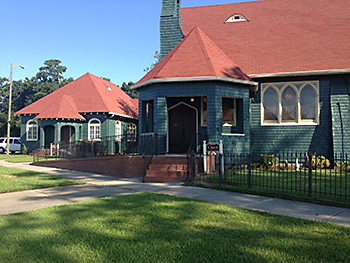
    (Photo: St. Joseph's Episcopal Church in Fayetteville is one of many places of worship in the area. Courtesy photo)

  • 12On a quiet stretch of land just outside Fort Bragg on 5572 Shenandoah Dr., the open fields of Rick’s Place will soon turn into a maze of climbing rigs, swinging bars and cheering crowds. Families from across the region will gather for one of the area’s most anticipated spring traditions: the 7th Annual Ninja Warrior Obstacle Course, hosted by the Rick Herrema Foundation.
    The event returns this April, 18-19 and 25-26, with two weekends of competition and family focused activities. Organizers expect between 1,200 and 1,400 participants and spectators each weekend. What began as a modest community race has grown into one of the largest family friendly gatherings supporting military families in the Fayetteville area.
    The foundation was created in memory of Sgt. 1st Class Rick Herrema, a U.S. Army soldier killed in action during Operation Iraqi Freedom in 2006. Its mission centers on strengthening military families through outdoor programs, shared experiences and community events. Rick’s Place, a 50 acre green space located about five miles from Fort Bragg, serves as the foundation’s home base and hosts year round programming.
    For the foundation, the Ninja Warrior event is more than a physical challenge. It is a chance to build community among families who often face relocation, deployment cycles and the strain of military life.
    “The Ninja Warrior Obstacle Course really reflects the mission of Rick’s Place,” said Selah Lobban of the Rick Herrema Foundation. “Our goal is to create a safe and welcoming space where military families can spend meaningful time together.”
    Lobban said the event is intentionally designed to emphasize connection over competition.
    “We do that by providing quality experiences and community activities that bring people together,” she said. “This event is free for military affiliated participants because service members and their families already give so much. We believe cost should never stand in the way of military families being able to spend time together and make memories.”
    Professional Grade Courses, Family Friendly Atmosphere
    One of the event’s biggest draws is the authenticity of the obstacle courses. Both were designed by Darren Jeffrey, a professional obstacle course designer who has contributed to courses featured on the television series American Ninja Warrior. His involvement ensures the obstacles mirror the dynamic movement and challenge seen on the show while remaining accessible to families.
    “The partnership with Darren Jeffrey really adds to the excitement because he’s the visionary behind it all,” Lobban said. “He knows exactly what makes a course ‘Ninja Warrior style,’ so part of the excitement comes from the fact that he’s done this professionally.”
    Participants will encounter climbing walls, rope swings, suspended rings, balance obstacles and grip strength challenges. But unlike elite competitions, the courses at Rick’s Place are designed to welcome people of all ages and abilities.
    “Thanks to his expertise, we can design courses with different levels of challenge, both intermediate and elite,” Lobban said. “That way it’s fun and engaging for participants of all skill levels and ages.”
    Jeffrey’s connection to the event extends beyond design. He also serves on the foundation’s board, a relationship that Lobban said strengthens the collaboration.
    “He’s also a member of our board, which makes the collaboration even more special,” she said.
    A Festival Atmosphere
    While the obstacle courses are the centerpiece, the event resembles a community festival. Food trucks will line the grounds throughout both weekends, offering local favorites and refreshments. Fitness instructors will lead free recovery and mobility classes to help participants stretch and recover after attempting the course. Activity zones and festival games ensure younger children can participate even if they are not ready for the more demanding obstacles.
    Participants who register receive four hours of course access, giving families time to attempt obstacles multiple times while enjoying the festival atmosphere.
    Military affiliated participants, including active duty service members, veterans and their families, can run the course free of charge. Civilians may participate for $20 per person or $60 per family, with registration required.
    For Lobban and the foundation team, the event represents something deeper than athletic endurance.
    “This course is all about encouragement, confidence and having fun,” she said. “It’s about bringing the community together.”
    Military families often experience significant transitions as they relocate across the country or overseas. Events like the Ninja Warrior obstacle course provide a sense of stability and connection.
    “For military families, it provides a space to reconnect,” Lobban said. “They often experience so many transitions in their lives. In many ways, this event shines a light on military families and the importance of creating spaces like this where connection can happen.”
    The event also helps bridge the gap between military and civilian communities in the Fayetteville region. “For those who aren’t military affiliated, it can also help bring awareness to what military families go through,” Lobban said. “Events like this not only bring people together, but they also help highlight the mission of Rick’s Place and the importance of supporting the military community.”
    Families Finding Community
    For many families, the event becomes more than a weekend activity. It often serves as an entry point into a supportive community that continues long after the race ends.
    “We are the Richmond Family, and we love Rick’s Place,” one family shared in a testimonial. “They have a lot of family oriented events that we love to attend.”
    The Richmonds said the obstacle course and other wellness programs have helped them stay active while building friendships with other families.
    “We also attend the individual programs such as Bend and Brew and Circle Mobility,” they said. “These events help us continue to strive for great health and keep us motivated.”
    For their family, Rick’s Place has become more than a recreational venue.
    “The staff there are great and always helpful,” they said. “They are our family away from home. As a military family, we recommend Rick’s Place to all active and non active military personnel.”
    The Garza family found something equally meaningful: a sense of belonging during a difficult move. After spending 14 years stationed at Joint Base Lewis McChord in Washington state, the Garzas relocated to Fayetteville. For their children, ages 9 and 11, the transition was especially challenging.
    “Our children were born in the Pacific Northwest and had not moved as the typical Army family had,” the family said. “This was their first move, and it was very difficult to uproot to a new town, in a new state, with new schools, a new home and no friends.”
    Determined to help their children adjust, the family began searching for ways to connect with other military families. Their first stop was a summer event hosted by the Rick Herrema Foundation.
    “We appreciated that it was free because PCSing had financially hurt us,” the family said. “And it was all military families.”
    The impact was immediate.
    “We immediately felt welcomed and supported by the RHF staff and families.”
    The Garzas said the foundation’s support extended beyond social events. When their daughter needed sponsors for a local production of The Nutcracker, the foundation stepped in to help.
    “When we had a difficult time finding businesses to support her, it was RHF who saw the importance of activities for military children,” they said.
    A year after arriving in Fayetteville, the family continues to attend Rick Herrema Foundation events whenever possible.
    “Each one further helps us feel connected and a part of a greater military community,” they said. “We are truly thankful for RHF and their willingness and commitment to support military families.”
    As the obstacle structures rise again across the fields of Rick’s Place, organizers expect another strong turnout of families ready to climb, swing and cheer each other on. But beyond the physical challenge, the event represents something larger. Every participant, registration and donation helps support programs that allow Rick’s Place to continue hosting free events and activities for military families throughout the year.
    “It’s really about creating opportunities for families to spend time together,” Lobban said. “When military families feel supported and connected, it strengthens not only their lives but the entire community around them.”
    When the starting horn sounds this April, thousands of participants will take their turn on the course — climbing, swinging and celebrating the shared spirit that defines the Fort Bragg military community.
    For more information on how to register or to volunteer, visit https://rhfnow.org/ninja-warrior/

  • 11A burst of color is set to take over East Fayetteville as Luna Ticketing brings its immersive Color Craze experience to the area, transforming a traditional fun run into a vibrant festival atmosphere designed for participants of all ages on April 18, beginning at noon.
    Color Craze blends fitness, entertainment and social connection into a single event that encourages attendees to move at their own pace while engaging in a high-energy celebration. Unlike competitive races, the event emphasizes participation over performance, welcoming runners, walkers and dancers alike to travel through a course filled with color stations, music and interactive elements.
    Organizers describe the event as part of a broader concept known as the ColorVerse, a themed environment that focuses on sensory engagement and shared experiences. Participants are encouraged to embrace the visual spectacle as bursts of colored powder create a shifting landscape of bright hues throughout the course. The result is an evolving scene where attendees become part of the visual display itself.
    The event is designed to appeal to a wide demographic, from families with children to groups of friends and individual participants seeking a unique outdoor activity. The flexible format of the event allows individuals to engage at their comfort level. This is the ideal event for people who are interested in a group event that is not a run. Maybe call it an un-run, accessible to those who may not typically participate in organized runs. The emphasis remains on enjoyment, expression and community rather than speed or endurance.
    Music plays a central role in shaping the event’s atmosphere. Throughout the course and festival grounds, curated playlists and live entertainment elements contribute to a high energy environment that extends beyond the run itself. The finish area transitions into a celebration space where participants can continue to engage with the event through dancing, socializing and interactive experiences. This unique feature turns it into a day party vibe open to everyone.
    Events like Color Craze have gained popularity in recent years as communities look for ways to combine wellness initiatives with entertainment. By removing the competitive barrier often associated with races, these events create opportunities for broader participation and encourage physical activity in a more relaxed and inclusive setting. The addition of visual elements such as color powder enhances the appeal, particularly for those seeking shareable and memorable experiences.
    As anticipation builds, organizers expect a strong turnout from both local residents and visitors. With its focus on celebration, creativity and shared energy, safety and organization remain a priority for event coordinators. Structured start times, designated color zones and clear pathways are implemented to manage crowd flow and ensure a smooth experience for attendees.
    Participants are typically advised to wear light colored clothing to maximize the visual impact of the color elements at this social media worthy event and to prepare for an environment that may become dusty or vibrant throughout the event.
    The arrival of Color Craze in East Fayetteville reflects a growing interest in experiential events that go beyond traditional formats. By combining movement, music and immersive visuals, the event offers a distinct alternative to standard community gatherings. Color Craze is an event that leaves participants with lasting memories and a renewed sense of connection, all experienced through a spectrum of color.
    For more information and tickets, visit https://www.colorcraze.run/Fayetteville/.


  • 10The door chimes as Joseph Mason opens the door at Back-A-Round Records. The sound of rock music fills his ears as he ascends the narrow staircase lined with graffiti-esque art, glowing under black lights. Mason, a regular at the record store, begins thumbing through the worn sleeves of vinyl that crowd the small shop. All around him are boxes packed with music from records, CDs and cassette tapes, spanning genres and decades.
    “You never know what you’re going to find in a place like this,” Mason said, his eyes fixated as he flipped through the records. “It’s like you’re actually surrounded by Spotify.”
    During his search, Mason pauses when he pulls out “Why Can’t We Be Friends,” a 1975 album by War, and smiles. He quietly sang the chorus of the R&B song to himself as he began sifting through another crate of records.
    Moments like these are why Shawn Adkins, 45, opened Back-A-Round Records in Fayetteville. Coming from a family of musicians, music has always been a major part of Adkins’ life, he said. In 1987, Adkins remembers getting his first cassette tape, Poison’s “Open Up and Say…Ahh.”
    He and his brother would “spend hours per day jamming…headbanging and playing air guitar” while listening to the tape on their parent’s Sony boombox. When Adkins opened Back-A-Round in 2017, he wanted to share his love for music with others; however, he wasn’t sure if it would be a good idea with the domination of music streaming, he said.
    “I was thinking, if you start a McDonald's, people are going to come to that McDonald's because everybody wants McDonald's,” he laughed. “But a record store, I was like, dude, is there one person in Fayetteville that'd be interested?”
    Since the rise of music streaming in the early 2000s, millions of Americans have turned to platforms like Apple Music and Spotify to listen to their favorite artists. In 2025, 82% of music revenue came from streaming services, according to a new report from the Recording Industry Association of America (RIAA).
    However, vinyl has quietly made a comeback over the last 26 years. In 2000, records brought in less than one percent of total music revenue. In 2025, vinyl sales surpassed $1 billion for the first time since 1983, making up about 12% of the industry’s sales, according to the RIAA. This marks vinyl’s 19th consecutive year of growth.
    Vinyl is still just a slice of the market, but people like Mason represent a niche audience gravitating toward the format. For Mason, being in a space like Back-A-Round, or any record store, “gives a story” to the music he finds. Instead of just scrolling through a streaming platform, Mason said he can spend hours sorting through the stacks of vinyl and CDs, making the search for new music feel a lot more personal and intentional.
    “It gives me something to show for the music I like,” Mason said. “You can always buy a shirt or something, but telling your friend, ‘Hey, check out this cool album I found, let’s listen to it,’ it’s just more personal.”
    To Adkins, having a tangible product of music is why people have been coming back to records. In an age of digital streaming, he said, something gets lost when music exists only as files you can’t hold.
    “Once you have that in your hand, you got the artwork, you can smell the new on it, or the old on it,” he said. “It's one of the most magical things in the world.”
    It’s not only the ownership of an album that brings a personal connection between musicians and listeners, said Michal Palm, a UNC-Chapel Hill associate professor in the Department of Communication. Physical albums can also create a richer experience through their artwork, he said.
    “It can function as a way to kind of publicize your fandom, for a particular artist in the way that a poster or T-shirt can,” Palm said. “You can learn about your favorite artists by reading the liner notes and the information on the jackets.”
    Of course, online spaces like Amazon or eBay offer a quick way to buy records or CDs, but convenience can’t replace the satisfaction of discovering music in person, Palm said. Stumbling across something unexpected can make an album feel more meaningful and the environment of a record store adds to the experience in a way a website cannot, he said.
    This “thrill of the hunt,” as Adkins describes it, takes a “rare breed of artistic minded people” who are dedicated to sifting through music to find hidden gems. Mason is one of these “rare breeds” of people. Despite being a regular at Back-A-Round for the last five years, he said the excitement of “the hunt” never quite wears off.
    The ache in his back from slouching over the crates of records did not sway Mason from his search. Nearly an hour had passed since he first walked in, but Mason continued his hunt with determination.
    “Some days you might not find anything you want,” Mason said, tucking War’s album under his arm as he continued sifting through the records. “But sometimes, you’ll feel like you’ve won the jackpot.”
    And today, Mason felt like a millionaire.
    He stopped his search again and pulled out The Isley Brothers' “The Heat Is On,” an album Mason had recently fallen in love with. He carried both of his treasured finds to the front of the store where Adkins sat, sorting through his latest shipment of records for the shop.
    Mason chatted excitedly with Adkins about his finds from the day, before heading back down the colorful stairway.
    “I’ll see you again soon, man,” Mason said with a small wave to Adkins.
    After Mason disappeared down the stairs, Adkins returned to the stack of new arrivals. Music habits have changed, he said, but the community that fills his shop makes him feel like the culture around record culture is far from over.
    “What I'm able to do for people is give them that opportunity to fall in love with music because in the end, I want to give back,” Adkins said. “I want to share music with people because it changed my life. So, I want to give back to music what it gave to me.”

    (Photo: Shawn Adkins, owner of Back-A-Round Records, says music has always been a part of his life. Photo by Anna Tart)

  • 9For over three decades, the Child Advocacy Center of Fayetteville has stood as a quiet but powerful shield for the community’s most vulnerable citizens. Since its founding as a non-profit in 1993, the center has provided a sanctuary for children who have navigated the darkest of circumstances.
    As April approaches, the CAC is preparing for Child Abuse Prevention Month. Through a series of "Pinwheel" community events, the organization aims to turn Cumberland County blue in a show of solidarity and awareness.
    A Sanctuary for Healing
    The core mission of the CAC is rooted in a singular, compassionate goal: ensuring a child only has to tell their traumatic story once. Their primary work is to conduct forensic interviews with children who have been victims of abuse, human trafficking, or who have been witnesses of violent crime. By working with a multi-disciplinary team, the CAC streamlines the investigative process in an attempt to minimize further trauma; these partners include multiple local law enforcement agencies, school partners, local rape crisis centers, and a variety of healthcare organizations.
    “We strive to be a safe place where kids can come for hope and healing,” says John Webster, the Center’s Executive Director. In the last fiscal year alone, the center conducted 531 forensic interviews for children, most of whom are referred to the Center by law enforcement or the Department of Social Services.
    Beyond the initial interview, the healing process is supported by victim family advocates and trauma-focused therapists. Last year, 103 children received specialized therapy to help process their experiences in both group and one-on-one therapy sessions. Despite the intensive nature of these services, they are provided entirely free of charge to clients, supported by a diverse range of funding resources and an active 24-member Board of Directors.
    One other important aspect of the CAC’s work is working to eliminate the need for their services. Under the guidance of Volunteer Coordinator Faith Boehmer, the center provides training aimed at the prevention of child abuse. This is accomplished in a variety of ways. They work with young children, teaching them about body safety and autonomy and how to seek help if someone is hurting them. The Center recently hosted the Family Prevention Fair, a family-centered event aimed at providing connection, resources and hope.
    They also provide access to a training program called Darkness to Light's Stewards of Children©, a training program which seeks to help adults “prevent, recognize, and react responsibly to child sexual abuse,” according to cacfaync.org.
    The Symbol of Childhood: The Pinwheel
    In April, Fayetteville will be blooming with silver and blue. The pinwheel serves as the national symbol for child abuse prevention, representing the whimsy and freedom that every childhood deserves.
    The month kicks off with a Pinwheel Ceremony at the CAC campus on April 1. Guest speaker Kirk deViere, Chair of the Cumberland County Board of Commissioners, will join staff and volunteers to plant 500 pinwheels at the center’s headquarters at 222 Rowan Street. Pinwheels will also be placed in the Hurley Pots, the large black planters that line the streets of downtown Fayetteville. Many other businesses and organizations throughout our community will show their support for the prevention of child abuse by putting out pinwheels as well.
    Pinwheel gear can be purchased on CAC’s website. Supporters can purchase kits that include pinwheels and a yard sign, and other items that show their support for Child Abuse Prevention, such as stickers and jewelry. All proceeds from the sale of this merchandise go directly to support the mission of the center.
    April 10 is celebrated as “Wear Blue Day.” Everyone is encouraged to wear the royal blue that is the widely recognized color of child abuse prevention.
    New for 2026, the local CAC is partnering with Child Advocacy Centers of NC for the “Light It Up Blue” initiative. Residents will see iconic local landmarks, including the Market House, the Eiffel Tower at Bordeaux on Owen Drive, City Hall, and the CAC headquarters, bathed in blue light to signal the community’s commitment to protection and prevention.
    Be Their Voice
    The Child Advocacy Center will host “Be Their Voice, Help them Soar: Child Abuse Summit” on April 16. Hosted at Snyder Memorial Baptist Church, this free, one-day event features guest speakers, break-out sessions, and a celebration of Champions of Children. While the event is free, registration is required and available through the CAC website.
    Looking Forward
    Coming soon is the Center’s 10th Annual Ultimate Lip Sync Showdown. This high-energy fundraiser features groups of all kinds and sizes, performing lip-synced musical numbers. The Center is currently seeking performance groups and sponsors for the May 2 event. Anyone interested in getting in on the fun should visit https://www.cacfaync.org/how-to-help/fayettevilles-ultimate-lip-sync-showdown.html
    Whether through a monthly donation on their website or by displaying pinwheels at their home or business, the CAC invites every citizen to play a part in safeguarding the future. As the pinwheels spin in the North Carolina breeze this April, they serve as a reminder that every child deserves a life free from fear.

  • Up & Coming Weekly is proud to announce the addition of three new high profile distribution locations for their hyper-local community newspaper, bringing its total to over 350 pickup points throughout Fayetteville, Fort Bragg, and Cumberland County.
    Beginning this week, readers can pick up their FREE Up & Coming Weekly newspaper at any of the following Lumbee Guaranty Bank locations:
    • West Fayetteville – 28304            2315 Bloom Avenue
    • Hospital Area – 28304                  2939 Village Drive
    By partnering with community minded organizations like Lumbee Guaranty Bank, Up & Coming Weekly continues to make its publication easily accessible to residents across the county. 
    According to Bill Bowman, Publisher and Owner of Up & Coming Weekly, “This expansion strengthens our mission to keep the Fayetteville/Fort Bragg community informed and up to date on local news, views, arts, entertainment, and events."
    "It is community minded organizations and businesses like Lumbee Guaranty Bank that have propelled our success over the past thirty years," Bowman said. "Like Lumbee Guaranty Bank, we are proud to be serving the residents of Cumberland County.” 
    Up & Coming Weekly also publishes Kidsville News! literacy and educational resource for Cumberland County Schools, and is host to the “official” Best of Fayetteville, now celebrating its twenty-ninth year. 
    Up & Coming Weekly can also be read online at www.upandcomingweekly.com. The digital version of the newspaper is updated every week. 

    For questions regarding stories or advertising, please call 910-484-6200.

  • 7Cumberland County Board of Commissioners Chairman Kirk deViere delivered the 2026 State of the County Address on March 17 at the historic Cumberland County courthouse. It also commemorated the 100th anniversary of the courthouse, marking a century since its 1926 opening.
    Framed as a military mission brief titled Mission: Forward, the address focused on a Vision 2030 plan to transform the county into a national model for military-connected community development. The plan outlined clean water access, strong education and workforce systems, expanded mental health services and economic growth and innovation.
    On another note, deViere is one of the core community leaders also working on a collaborative Vision 2030 initiative hosted by the Greater Fayetteville Chamber. Similar in nature, the plan brings sectors of the community together with strategic focus areas of safety and community well-being, education and workforce alignment, economic development and infrastructure, innovation and entrepreneurship and media/civic pride.
    On Mar. 19, the board met with the Cumberland County delegation, including Sens. Val Applewhite and Tom McInnis and Reps. Mike Colvin, Charles Smith and Diane Wheatley presented their 2027 State Legislative Agenda. The primary requests centered on securing $92.5 million in state allocations for critical infrastructure and community services.
    A major request was for $65 million to build a new, state-of-the-art school, with E.E. Smith High School identified as the critical priority due to aging facilities and specific enrollment needs. The board also requested a total of $55 million for water infrastructure, including $50 million for county-wide public water and sewer to ensure safe, sustainable water access and $5 million specifically for the Gray’s Creek District. Other requests included $2 million for a Mobile Incident Command Unit and $500,000 for digital dispatch equipment upgrades, $4 million to expand youth mental health and substance use treatment services within both the community and the county school system, and $2 million in preconstruction funding for a regional aquatic center.
    Beyond funding, Chairman Kirk deViere emphasized the need for agency-level partnerships to help our Tier 1 community to address long-term growth and infrastructure capacity gaps.

    City of Fayetteville
    On Mar. 12, the Fayetteville City Council also met with the Cumberland County delegation, including Sen. Tom McInnis and Reps. Charles Smith, Diane Wheatley and Mike Colvin to discuss legislative priorities. Council members discussed local goals with state-level advocacy and funding needs, including a $29.5 million wish list of requests. The council asked for funds for key infrastructure and community projects such as $10 million for pedestrian projects, $5 million for water/sewer expansion, $3 million for a regional public safety training center, $4 million for mental health and violence prevention initiatives, $2 million for affordable housing, $1 million for workforce development and $500,000 for transportation studies.
    The total ask between the city council and county commissioners was $126 million.
    On Mar. 23, the Fayetteville City Council delayed approval for a $13 million construction contract for a proposed McArthur Road Sports Complex in order to further inspect the qualifications of the contractor. The project is slated to have baseball and softball fields equipped for tournaments, over 500 parking spaces, a concession/restroom building and a large multi-use building with an open-air pavilion. Also proposed were additional amenities such as a splash pad, play areas and walking trails.
    In a presentation to the council, Robert Van Geons, president/CEO of the Fayetteville Cumberland Economic Development Corporation, reported that the city has no remaining infrastructure-ready sites capable of supporting major projects similar to the Amazon fulfillment center. This sparked a discussion on the need for new large-scale sites to remain competitive for transformational business projects.
    While the City Council focused on infrastructure, a separate public forum was held the same evening by the Cumberland County Board of Commissioners. During the special meeting on Mar. 23, more than 25 residents urged the board to implement a one-year moratorium on data center development. Residents cited several critical concerns regarding the potential impact of these facilities on the community, and the massive amount of electricity required to power these centers would lead to infrastructure upgrades, the costs of which would be passed on to residents through higher utility bills.
    In other news, the public will have a preview of the long-awaited tennis courts at the new Courts at Glenville Lake on Wednesday, Apr. 1, from 11 a.m. to 2 p.m. at 730 Filter Plant Drive.
    According to City officials, the 6,594-square-foot tennis center will feature 11 tennis courts, one of which will be used as a championship competition court, four pickleball courts, locker rooms, a lounge, a learning area and a pro shop.

    About the Greater Fayetteville Chamber
    Advocacy is a cornerstone of the Greater Fayetteville Chamber. Every week, the Chamber dedicates staff to attend City of Fayetteville and Cumberland County meetings as well as monitoring updates on the state and federal levels. We monitor legislation locally, statewide and federally to protect our community’s business interests. With 91% of U.S. adults recognizing a Chamber of Commerce's impact on growth, membership ensures a strong voice shaping policies, driving economic success and building a thriving business community—together. To learn more, visit www.faybiz.com or email jmclaughlin@faybiz.com.

    (Photo: Members of the Cumberland County Board of Commissioners met with the State Legislative Delegation to discuss policy priorities, strategic partnerships and targeted investments that will help shape the community’s future. Together, they continue working to ensure Cumberland County’s voice is reflected in the decisions impacting the community. Photo courtesy of Cumberland County NC, Gov. Facebook page)

  • 6Cape Fear Valley Health’s announcement naming Daniel “Dan” Weatherly as its new Chief Executive Officer marks an important and encouraging moment for our region. In selecting Weatherly, the organization has chosen a leader who not only understands the complexities of modern healthcare but also understands us—the people, the businesses, and the community he has served for more than a decade.
    Weatherly’s rise through the ranks of Cape Fear Valley Health is a testament to both his talent and his character. Since joining the system in 2011, he has distinguished himself in every role he has held—from physician relations to Chief Operating Officer to President of Cape Fear Valley Medical Center. His leadership during the COVID 19 pandemic, his oversight of systemwide operations, and his steady hand in expanding services and strengthening partnerships have all demonstrated that he is the right person to guide this vital institution into its next chapter.
    What makes this appointment especially meaningful for Fayetteville and Cumberland County is Weatherly’s deep engagement with the broader community. His active involvement with the Greater Fayetteville Chamber of Commerce reflects a leader who recognizes that healthcare does not operate in isolation. It is intertwined with economic development, education, workforce readiness, and the overall quality of life in our region. Weatherly understands that connection, and he invests in it.
    His vision for Cape Fear Valley Health is forward looking and rooted in long-term sustainability:
    • Building a stronger healthcare workforce pipeline
    • Expanding partnerships with local colleges and universities
    • Supporting the development of the new school of medicine
    • Strengthening Cape Fear Valley’s role as a regional academic health system
    Cumberland County Board of Commissioners Chairman Kirk deViere underscored the significance of the moment.
    “I can tell you that our partnership with Cape Fear Valley Health matters deeply to the future of this county. Dan Weatherly has earned this moment,” he said. “With a new medical school on the horizon and this health system continuing to grow its reach and impact across our region, he is the right leader at the right time. I have no doubt he will carry this organization forward with the same steadiness and character he has shown throughout his career. We have momentum, and he is going to keep it going.”
    These initiatives are not just good for the hospital—they are good for Fayetteville, Cumberland County, and the entire region. They represent a commitment to keeping high quality care close to home and ensuring that future generations benefit from the investments being made today.
    Weatherly has made it clear that Cape Fear Valley Health will remain grounded in compassion, excellence, and integrity. That commitment aligns perfectly with the values that have shaped this community for decades. As one of the region’s largest employers and most essential institutions, Cape Fear Valley Health plays a central role in the well being of our residents. With Weatherly at the helm, that role is in capable and visionary hands.
    Up & Coming Weekly congratulates Dan Weatherly on his appointment and applauds Cape Fear Valley Health for making a choice that strengthens confidence in the future of healthcare in our region. This is leadership we can trust—and progress we can all support.

    (Photo courtesy of Cape Fear Valley Health)

  • 4In an era when utility costs across the nation seem to rise faster than household incomes, it’s easy for frustration to overshadow facts. But every once in a while, it’s worth pausing to recognize the people who work tirelessly behind the scenes to keep our community running — and to keep our rates among the lowest in North Carolina.
    That’s exactly what the Fayetteville Public Works Commission has done, and continues to do, for the residents of Fayetteville and Cumberland County.
    In a meeting in late February, PWC held a public hearing and adopted a two year electric rate adjustment. No utility enjoys raising rates, and PWC is no exception. But the truth is simple: the cost of providing safe, reliable electric service has risen sharply, and PWC has absorbed those increases for as long as possible. Now, to keep pace with unavoidable expenses, modest adjustments are necessary.
    And here’s the part too often overlooked — PWC has done an extraordinary job protecting its customers from the worst of national price increases.
    A Local Success Story
    According to J.D. Power, average utility prices nationwide have surged 34% since 2020. That’s the reality facing families from coast to coast. However, PWC has kept electric rate increases to just 16.5% over the same period — less than half the national average. That didn’t happen by accident. It happened because PWC’s leadership, engineers, lineworkers, accountants, and support staff have spent years cutting costs, tightening budgets, and finding efficiencies long before asking local Fayetteville/Cumberland County customers to pay a penny more. Over the last four years, PWC has reduced operations and maintenance costs by an average of $15.8 million per year, and deferred or reclassified another $7.6 million annually in capital projects. That is responsible stewardship.
    The Real Costs PWC Must Address
    Even with these savings, some increases cannot be avoided:
    • Duke Energy rate increases
    • Debt service for capital improvements
    • Rising electrical system and operating expenses
    These are not optional costs. This is the price of keeping the lights on, our water clean, and the wastewater system safe — 24 hours a day, 365 days a year.
    Still Among the Lowest Rates in North Carolina
    The average residential customer will see about an $8 a month increase, and even with these unavoidable adjustments, most PWC residential customers will be less than the state average and less than every other electric provider serving Cumberland County.
    Without a doubt, rates matter, but so does reliability, and our PWC ranks among the best in the entire state. Google it! Fewer outages. Faster response times. Better infrastructure. That’s the result of decades of disciplined investment and a workforce committed to excellence.
    When storms hit, when temperatures spike, when the grid is strained, PWC’s crews are out there — often before dawn, often in dangerous conditions — making sure our community stays powered and protected.
    Unlike other towns and cities, our rate adjustments were not made in a back room or rushed through without scrutiny. This is another way PWC reflects commitment to the trust of the people it serves.
    This editorial was chosen and needed because it’s important to give credit where credit is due. Many communities feel powerless against rising utility costs. Here in Fayetteville and Cumberland County, we have something very special: a public utility that works relentlessly to keep rates low, reliability high, and service dependable.
    PWC’s board, management, staff, and employees deserve recognition for their hard work and discipline, foresight, and dedication. They have done what many utilities across the country have not done. They have protected their customers from the worst of national inflation while continuing to deliver exceptional service.
    That’s not just good management. That’s good stewardship. And it’s one more reason Fayetteville remains a strong, resilient, and forward looking community.
    Thank you for reading Up & Coming Weekly.

  • The NC History Center on the Civil War, Emancipation & Reconstruction, in Fayetteville's Arsenal Park, 801 Arsenal Ave., invites you to be a part of the Center - forever.

    On Tuesday, March 31, there will be a topping-off ceremony, as the final steel beam will be hoisted into place atop the building by Balfour Beatty LLC, the construction company that is building the 60,000-square foot building which will house the Center.

    Beforehand, everyone is invited to sign the beam that will be installed atop the steel framework that will make up the Center.

    The festivities begin at 10:30 a.m, when the first guests arrive and begin signing the beam. Time has been set aside for welcoming remarks and the beam is expected be put into place at about 11:30 a.m. After, there will be time to take pictures.

    Parking will be available on Myrover Street and at 824 Branson St.

    This latest project will be the last of three planned phases of the full Center. The first was the three-building VanStory History Village, the second was an outdoor pavilion and classroom, and in this, the third and final stage, a 60,000 square foot main building is being built. A groundbreaking ceremony was held marking the beginning of the building's construction last July.

    Once complete, the building will house classrooms, an auditorium, state-of-the-art interactive exhibits and galleries to host traveling exhibits. At that time, the Center will be turned over to the North Carolina Department of Natural and Cultural Resources, where it will join the state's museums division.


    While this is a significant milestone in the construction project, much remains to be done, from fitting out the interior - to include floors, walls, ceilings, electrical outlets, lighting and plumbing fixtures, to installing exhibits. There's a lot of work left to do.

    Opening is expected in the spring of 2028. The Museum will open its doors to a place that will benefit all North Carolinians from its home in Fayetteville, a place that will help us learn how to build, for all of us, a more perfect Union.

  • 20I recently added a new table to the WCLN studios. Nothing fancy. It’s made from rough, flawed walnut boards I picked up somewhere along the way. I left many of the imperfections untouched and finished it with raw steel hairpin legs—a quiet nod to my oldest son, an artist whose medium was metal before he passed not long ago. Seeing that table each day has caused me to think again about what craftsmanship really means to me.
    Like a lot of people I know, life stays busy. My calendar would be packed with every kind of gathering if I let it. I’ve even learned not to act too surprised when I’m reminded of a birthday, anniversary, recital, or event I should have remembered—that’s become something of an art form. And as much as my wife and I can, we show up. But I’ve also learned the value of stepping away.
    For me, retreat doesn’t usually mean the beach or the North Carolina mountains. More often, it’s a short walk to the workshop behind our house, with the dog tagging along.
    In that quiet space, away from the noise of daily life, I make things. Sometimes it’s silent except for my thoughts; other times I turn the music up just to quiet them down. I work with different materials, but wood is my favorite. Most of what I use would be considered scraps—leftovers from other places that saw no value in them. Exotic hardwoods, common lumber, small pieces others discard. To them, it’s waste. To me, it’s treasure.
    Woodworking has become more than a hobby—it’s a reflection of the life I’ve been given. I’ll take on a project now and then, but I rarely sell what I make. Selling changes something. This, for me, is about recognizing the beauty and usefulness in each piece—no matter the size—and beginning the careful work of preserving it, preparing it, and giving it a new purpose. In a word, it’s redemption.
    Without the grace and redemption I found in Jesus Christ, my life would be nothing. There was a time I might have been considered a castoff, but when Jesus found me, He saw something worth shaping. Since 1981, He’s been doing just that—preserving, refining, repurposing. And even in seasons when I feel like I have little to offer, He reminds me there is still purpose. Not just for me—for every life.
    It’s hard to put all of that into words when I hand someone a simple piece made from reclaimed wood. But to me, it’s never just an object. It represents time, attention, and care. Every piece carries its flaws. Every piece is one of a kind. Just like you.

  • 19"Just as service members and their families have served us, we must serve them," said Governor Josh Stein at Fayetteville Technical Community College on Aug. 6, 2025. "Supporting military families and ensuring they can focus on their core mission to keep us safe is critical to our nation's security and the right thing to do. I am grateful that North Carolina is a Do Your Part State, and I am proud to reaffirm our state's commitment to being a top state for military families."
    Fayetteville Technical Community College shares the Governor's commitment. We proudly serve more than 1,200 military dependents who are currently receiving federal benefits designed to support them on their journey to become "Future Ready" for their next educational or career endeavor. Our faculty, staff and administration include many military-connected individuals who are here to guide military-connected students every step of the way.
    You may have already met an FTCC alum in your community; perhaps a nurse at Cape Fear Valley Medical Center, a cybersecurity analyst protecting your sensitive data, or a caregiver at your child's preschool. Chances are, some of your local police officers and firefighters were trained here at FTCC. We would love for you to join our family and explore the career you have always wanted, a remote opportunity that fits your lifestyle, or a pursuit that gives you purpose while supporting your warfighter.
    Financial Assistance Available
    FTCC's costs are already among the most affordable in the region, and military-connected students may qualify for additional financial assistance tailored
    specifically to them.
    • MyCAA Scholarship: As the spouse of an active-duty service member in grades E-1 through E-9, W-1 through W-3, or O-1 through O-3, you may qualify for the My Career Advancement Account (MyCAA) scholarship. This benefit provides up to $4,000 per fiscal year toward a license, certification or associate degree, or up to $2,000 for continuing education courses needed to maintain employment-related credentials.
    • VA Chapter 35 Benefits: Available to the spouses and children of veterans with a 100% VA disability rating, as well as survivors of those killed in the line of duty, listed as missing in action, or who died from a service-connected disability.
    Our Military and Veterans Programs team is ready to help you determine which benefits apply to you and walk you through the process.
    Ready to Get Started?
    Visit our website at faytechcc.edu or stop by the All-American Veterans Center, located above the bookstore on the FTCC Fayetteville campus. If you live or work on Fort Bragg, our team at the Bragg Education and Training Center, located at Building 1-3571, Wing F, 4520 Knox Street, is there to serve you as well.
    Governor Stein said it best — North Carolina is committed to being a top state for military families, and FTCC is proud to lead that effort locally. We hope to be your first choice on your educational and career journey. We look forward to welcoming you to campus, online and in the community alongside our more than 1,200 military dependent students and thousands of military-connected alumni.

Latest Articles

  • When inspiration becomes art: Book, song inspired by Pope’s Jubilee Message created by local author
  • CVMA® NC 15-1 keeps service at its center
  • Autism Academy holds resource fair, activity day
  • Walk to Remember: 9/11 Memorial Stair Climb
  • Cumberland County Fair pulls into station with "The Agricultural Express"
  • "Bright Star" kicks off Cape Fear Regional Theatre season
Up & Coming Weekly Calendar
  

Login/Subscribe